That Unpleasant Odor That Won’t Go Away
If your house smells like sewage, it’s more than just an inconvenience—it’s a signal that something in your plumbing system may not be working the way it should. Sometimes the cause is simple, like a dry trap, and other times it can point to a deeper issue in a drain or sewer line. Either way, the goal is the same: reduce the odor, protect your home, and avoid repeat problems.
For homeowners and property managers in Northwest Indiana and the Chicago Southland region, Flotek Sewer & Drain focuses exclusively on sewer, drain, and underground plumbing services, with an emphasis on accurate diagnostics and long-lasting solutions. The guidance below can help you understand what may be happening, what you can safely check, and when it makes sense to bring in a specialist.
You’ll see common scenarios that create odor, what they can mean in real life, and how professionals typically narrow down the source—without guessing or replacing things unnecessarily.
Why Sewage Odors Show Up Inside a Home
Most sewage-like odors inside a building come from one of two general sources:
- Odors from sewer gases entering living spaces through a drain opening, fixture, or compromised seal
- Odors from waste or buildup in drains that hasn’t fully cleared, even if water is still flowing
This is why a “sewage smell” can be confusing: it may be a true sewer gas issue, or it may be organic buildup and stagnation. Home layout also plays a role—basements, lower-level bathrooms, laundry rooms, and rarely used fixtures are common places for odor to appear first.
It’s also common for the odor to come and go. That pattern can be useful. For example, smells that happen after heavy water use may suggest a venting or drain flow issue, while smells that appear after long periods of non-use may point toward a dry or failing trap.
Homeowner Clues That Help Narrow Down the Source
You don’t need to become a plumber to gather helpful clues. A few basic observations (without taking anything apart) can provide direction:
- Where is the smell strongest? Pinpointing whether it’s near a bathroom sink, a shower, a basement floor drain, or a utility room helps narrow the likely path.
- Does it happen at certain times? Odor after rain, after a load of laundry, or after multiple showers can indicate different stress points in the system.
- Is there gurgling? Gurgling can suggest air movement issues and may be associated with a clogged vent pipe or partial blockage.
- Is there slow drainage? Slow drains can be related to buildup, a developing clog, or a downstream restriction that needs attention.
- Any water on the floor or around fixtures? Moisture can amplify odors and may point to leaks, seals, or failing connections.
These clues don’t confirm a diagnosis, but they can help you avoid guessing. Odor problems often have more than one contributing cause.
Common “Inside the House” Causes That Can Create Odor
1. A Dry or Poorly Sealed Trap
Many drains rely on a water seal to block sewer gases. That seal is typically created by a p-trap (or a similar trap design) that holds water. When a drain is rarely used, the water in the trap can evaporate over time. When the water level drops too low, odors can pass through.
This is a common reason a sewer gas smell in house shows up in guest bathrooms, basement floor drains, or utility sinks that don’t see regular water flow. In many cases, running water for a short time in the affected fixture may help restore that water seal—without needing anything more invasive.
2. Buildup in a Drain Line or Fixture
Not every sewage-like odor is truly “sewer gas.” In bathrooms and kitchens, organic buildup can cling to the inside of pipes and create a persistent smell. Soap residue, hair, food particles, and grease can all contribute. In these cases, the odor may be more noticeable during or after water use, when the water agitates the buildup.
If the smell is localized to one area (like one sink or one shower), the issue may be isolated to that drain line—though it’s still smart not to assume without inspection if the odor is severe or recurring.
3. Basement Floor Drains and Utility Areas
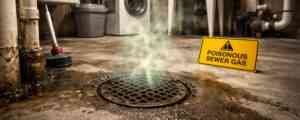
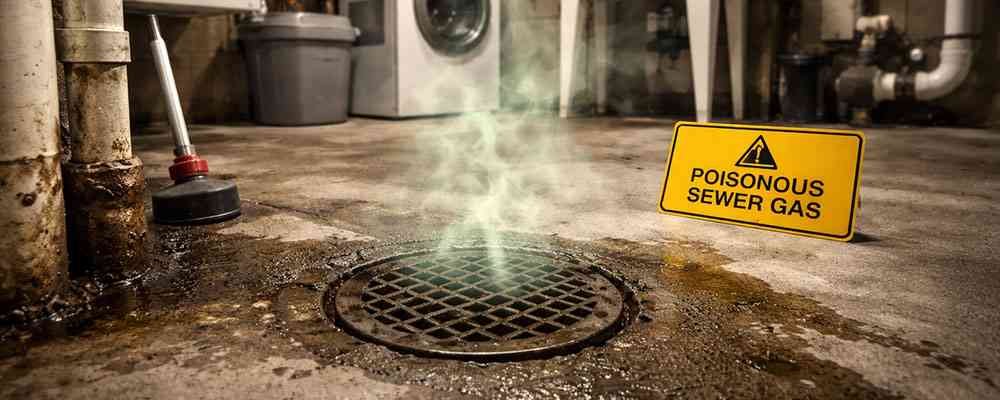
A floor drain odor is one of the most common reasons homeowners notice sewage smells, especially in basements. Floor drains are often out of sight and out of mind, and they can dry out or accumulate buildup. If the basement is finished, odors can travel through walls or HVAC pathways and feel like they’re “everywhere,” even when the source is a single drain opening.
If you suspect a floor drain odor, paying attention to when it shows up (after laundry, after rain, after long non-use) can be especially helpful.
4. Venting Issues That Allow Odors to Move Inside
Plumbing systems use venting to balance pressure and move sewer gases safely out of the home. When venting doesn’t work properly, odors can be pulled into living spaces. A clogged vent pipe is one potential cause. Vent clogs can happen for multiple reasons, including debris or seasonal factors that affect roof vents.
Venting problems can sometimes show up as gurgling drains, toilet bubbling, or inconsistent drain behavior. If you’ve noticed those symptoms along with odor, a clogged vent pipe is one possibility worth having assessed.
5. Garbage Disposal and Kitchen Drain Odors
Kitchen sinks can produce odors that resemble sewage, especially when food waste builds up in a disposal or in the drain line downstream. In some cases, homeowners focus on the sink when the actual problem is further along the drain system. If the smell is strongest near the kitchen and increases after running the disposal, that’s a useful clue—but it still doesn’t rule out a larger drain issue.
When Your House Smells Like Sewage After Rain or Heavy Water Use
Odor patterns matter. When a sewage smell appears after heavy rain, a lot of water usage, or rapid drainage events (multiple showers, laundry, dishwasher), it can suggest the plumbing system is under strain. Sometimes the problem is simply a drain that’s drying out or getting disturbed. Other times, it may be connected to a developing restriction or a changing condition in the main line.
One concern professionals look for in these scenarios is the possibility of a sewer line backup starting to form. A sewer line backup doesn’t always show up as obvious flooding at first. It may begin with slow drains, gurgling, or intermittent odor—especially in lower-level fixtures.
Because conditions vary from home to home, it’s best to treat repeated “after rain” odor as a reason to investigate rather than something to ignore.
Why It Matters to Address Sewage Odors Sooner
It’s easy to try to “live with it” for a while, especially if the smell comes and goes. But recurring odor is often a sign that something is off—either a seal isn’t doing its job, airflow isn’t right, or waste and buildup aren’t clearing properly.
From a practical standpoint, delaying attention can lead to:
- More frequent odor episodes and wider spread through the home
- Drain performance getting worse over time (slow drains becoming chronic)
- Higher risk of a more disruptive event, like a larger blockage or backup
- Harder-to-pinpoint problems as conditions change and multiple issues overlap
Calm, early action is usually the most cost-effective path, even if the solution ends up being simple.
Safe, Reasonable Checks Homeowners Can Try
The key is to focus on low-risk steps that don’t require disassembly or forceful chemicals. If you’re unsure, or if the odor is strong and persistent, professional assessment is the safer choice.
- Identify the likely area. Note where the smell is strongest and whether it’s tied to a specific drain or room.
- Run water in rarely used fixtures. Restoring the water seal in a trap can help if a dry trap is the cause.
- Look for obvious moisture. Check around toilets, under sinks, and near floor drains for dampness that could amplify odor.
- Ventilate the space. Fresh air can reduce discomfort while you determine next steps.
If the odor improves briefly and then returns quickly, that’s often a sign the underlying condition is still present and needs professional diagnostics.
How Sewer and Drain Specialists Find the Real Source
Because odor causes can overlap, professionals often focus on confirmation rather than assumptions. Flotek Sewer & Drain uses advanced diagnostics to identify what’s happening before recommending next steps. Depending on symptoms, this may include:
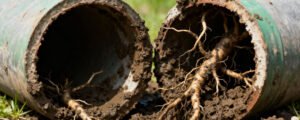
- sewer camera inspection to see inside drain and sewer lines, identify buildup, breaks, or blockages, and confirm whether the issue is isolated or in a main line
- sewer line locating to map the line path and help target the right area for repair or further evaluation
- Drain cleaning or rodding when clearing buildup or obstructions is appropriate, with an emphasis on preventing repeat problems
This diagnostic-first approach matters because two homes with the same smell can have completely different root causes. Accurate testing helps avoid wasted time and unnecessary work.
Odor Sources That Are Tied to Specific Equipment
Sump and Ejector Systems in Lower Levels
Homes with basement bathrooms or below-grade plumbing sometimes rely on pump systems to move wastewater up to the main line. If an ejector pump system has issues with seals, venting, or internal buildup, it may contribute to odors—especially if the smell is concentrated near the pump basin or nearby fixtures.
Because these systems involve wastewater handling and sealed components, it’s usually best to have a sewer and drain specialist evaluate them rather than trying to troubleshoot beyond basic observation.
Cleanouts and Access Points
A cleanout provides access to the drain or sewer line for service. If a cleanout cap is loose, damaged, or improperly sealed, it can allow odors to escape. This can sometimes be overlooked because the cleanout may be behind a wall panel, in a utility room, or near the foundation.
Cleanout issues can be quick to address once identified, but they’re also easy to miss without knowing where to look.
Seasonal and Environmental Factors That Can Contribute
In Northwest Indiana and the Chicago Southland region, changing seasons can influence how and when odors appear. A few examples:
- Cold snaps and dry indoor air can speed up evaporation in traps, increasing the chance of a sewer gas smell in house during winter.
- Heavy rain or saturated ground can change how sewer lines behave, and may reveal a weak point that wasn’t obvious in dry conditions.
- Falling leaves and debris can contribute to venting problems, which may be associated with a clogged vent pipe in some homes.
- Older homes and aging drain systems may be more prone to shifting, buildup, and seal issues that create recurring odor patterns.
These factors don’t guarantee a specific problem, but they can explain why the smell suddenly appears during certain months and disappears in others.
What Odors Can Mean for Health and Indoor Air Comfort
Sewage-related odors are unpleasant, and they can also be irritating to breathe around. While many odor issues are resolved with routine service and straightforward repairs, it’s smart to treat persistent sewage smells as a reason to investigate. Some sewer gases can include hydrogen sulfide, which can be irritating at higher concentrations. If you want a general educational overview, the CDC’s hydrogen sulfide resource provides background information.
If anyone in the home feels unwell, or if the odor is extremely strong, err on the side of caution: ventilate the space and consider professional evaluation to identify the source quickly.
Cost and Service Expectations for Resolving Sewage Odors
Costs vary depending on what’s actually causing the odor and how easy the affected area is to access. In many cases, the biggest cost factor isn’t the smell itself—it’s the underlying condition creating it.
Most homeowners can expect pricing to depend on several practical factors, such as:
- Scope of the issue (single fixture versus whole-house odor)
- Whether buildup can be cleared with drain cleaning or rodding, or whether repair is needed
- Whether diagnostics are required, such as a sewer camera inspection to confirm what’s happening
- Line accessibility (finished basements, tight utility areas, or buried line depths)
- Risk of a sewer line backup or evidence that the issue involves the main line rather than a branch drain
What matters most is getting clarity first. Accurate diagnostics can prevent a cycle of temporary fixes that don’t address the real cause.
Maintenance Habits That Help Prevent Recurring Odor Problems
Not every odor issue is preventable, but there are habits that can reduce the odds of repeat episodes:
- Use seldom-used fixtures periodically. Running water occasionally can help keep traps sealed and reduce the chance of odors drifting in.
- Pay attention to slow drains early. Early drain cleaning is often simpler than waiting until a restriction becomes a bigger blockage.
- Watch for repeat patterns. If odor repeatedly follows rain or heavy usage, it’s worth investigating rather than masking.
- Be cautious with what goes down drains. Grease, heavy food scraps, and “flushable” items can contribute to buildup and restrictions.
- Consider periodic service. Maintenance programs can be a practical option for properties that have recurring drain issues or older plumbing systems.
If you’ve dealt with a clogged vent pipe before, or if your home has a history of odor and drainage issues, a proactive plan can help reduce surprises—without over-treating what doesn’t need attention.
When to Call a Sewer and Drain Professional
There are plenty of situations where a quick homeowner check may solve the problem, but there are also clear signs that it’s time for professional service. If any of the following are true, it’s usually a good idea to schedule an evaluation:
- The smell is strong, persistent, or spreading through multiple rooms
- You notice gurgling drains, bubbling toilets, or inconsistent drain behavior
- There are multiple slow drains at once (which can suggest a larger restriction)
- You suspect a sewer line backup might be developing, especially in a lower level
- Odor keeps returning even after basic steps like running water in traps
These are common signals for when to call a sewer and drain professional, particularly because diagnosing by “guess and check” can waste time and money.
Get Help From a Sewer and Drain Specialist Who Focuses on Diagnostics
If you’ve tried the basics and the odor keeps coming back, a focused inspection can bring clarity fast. Flotek Sewer & Drain specializes exclusively in drains, sewers, and underground plumbing, with tools like camera inspections and line locating to identify the true cause of odor and recommend the right fix.
When a house smells like sewage and you want a long-lasting solution—not just a temporary mask—reach out to contact the team to schedule service and get the problem properly diagnosed.